
Biaya Tersembunyi dari Pengerjaan Ulang dalam Pemesinan Komponen Besar
In large-component machining, rework usually means processing a part again after some or all of the machining has already been completed. For manufacturers, however, the cost of machining rework is not limited to the additional machining time required.
When a problem is found on a workpiece, the machine time, labor, workholding, and production schedule already invested in the previous operations may all be affected. This can be particularly significant for large components with longer machining cycles, where one rework operation may also affect the scheduling of subsequent processes.
Therefore, reducing rework risk is not simply about avoiding one additional machining operation. It is about preventing a local problem from creating further disruption throughout the production process.
1. Rework Adds More Than Machining Time
When a workpiece needs to be reworked, the most obvious cost is the additional machine time required to process it again. In actual production, however, rework often involves several other additional steps.
Re-checking the current condition of the workpiece comes first. The operators, through this check, should find out where the malfunction of the workpiece started, which worksteps were already carried out and how the next workstep shall proceed. If due to rework the workpiece needs to be re-clamped or repositioned then the check of the location and positioning shall repeat as well.
Also, it is likely that there will be some changes of the previously arranged resources and equipment to accommodate the workpiece. This can happen even in the situations, when all the machining operations in the production are done in series, as one workpiece reworking can lead to delays in subsequent operations.
Therefore, rework cost is not simply the cost of machining the workpiece again. What really matters is how much additional work a rework operation adds to a production process that was already underway.
2. Why Does Rework Have a Greater Impact on Large Components
For large components, the impact of rework deserves particular attention. This does not mean that large workpieces are necessarily more likely to require rework. Rather, when rework does occur, more production resources may already have been invested in the workpiece.
Large components may need to go through multiple machining stages before they are completed. If a problem is not discovered during an earlier stage and is only found after several operations have already been completed, the machining time and production planning invested in those previous operations have already been committed.
At the same time, reworking a large workpiece may also require consideration of equipment, workpiece support, and operator arrangements. If the rework requires the original machining condition to be changed, additional workholding, positioning, or process adjustments may be necessary.
This means that the actual impact of the same machining problem can be quite different between a part with a relatively simple process and a large component that has already gone through multiple machining stages.
For large-component machining, therefore, rework should be considered in the context of the entire production process rather than simply calculated as the time required for one additional machining operation.
3. The Later a Problem Is Found, the Greater the Potential Impact of Rework
Another factor that is easy to overlook when considering rework cost is when the problem is discovered.
If a problem is identified relatively early in the machining process, subsequent operations that have not yet been performed can still be adjusted according to the actual situation.
However, if several machining operations have already been completed before the problem is discovered, more factors may need to be reconsidered.
For example, can the machining that has already been completed still be retained? Do the subsequent operations need to be adjusted? Does the workpiece need to be repositioned? Does the original production schedule need to be changed?
This is why machining processes should not rely solely on final inspection.
For components with relatively long machining processes, confirming the machining condition at appropriate stages can help manufacturers identify problems earlier and avoid carrying an issue into later operations.
The point is not simply to add more inspections. Instead, manufacturers need to determine which stages are worth checking earlier based on the actual machining process, so that a problem can be identified before more machining has been completed.
4. Reducing Rework Risk Through Machining Planning
Reducing rework risk cannot rely solely on inspection after machining has been completed.
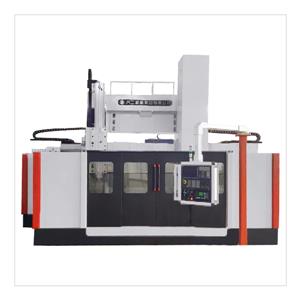
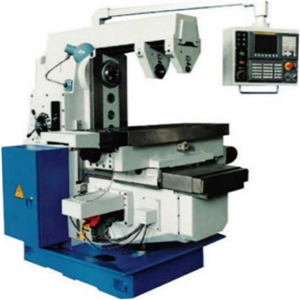
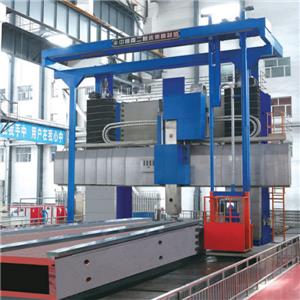
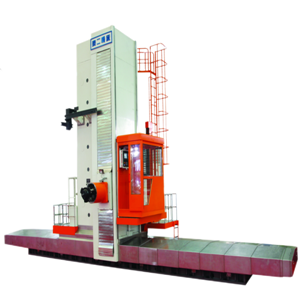
Before machining begins, the workpiece requirements, major machining areas, and overall process sequence should be clarified as much as possible. Equipment such as a CNC Milling and Boring Machine and machining methods can then be selected according to these requirements.
If the machining capabilities or working range of the equipment do not match the actual requirements of the workpiece, additional adjustments may be needed during production.
Therefore, when purchasing CNC equipment such as a CNC Milling and Boring Machine, manufacturers should not compare machines based only on individual specifications.
More importantly, they should consider whether the machine can be properly integrated into the actual production process and whether its capabilities match the workpiece requirements and process arrangement. This is particularly important for large components.
When buyers are able to look at the machining methods, process flow, and areas that might be adjusted, they will be able to see the problems before they become serious and costly rework. This should be done at the equipment selection stage because it's a lot cheaper to make the changes then.
This approach is more valuable for manufacturers of long-lasting and big parts than a direct comparison of different machines' specifications only.
Conclusion
The real issue with machining rework is not simply how much time is required to process a workpiece again. It is how much additional cost one machining problem can add to the entire production process.
For large components, the machining time, labor, and production planning already invested in earlier operations can make later rework more impactful. The later a problem is discovered, the more machining steps and production arrangements may need to be reconsidered.
Therefore, when carrying out large-component machining or planning for new CNC equipment, manufacturers can consider rework risk as part of their machining and equipment-selection decisions. Looking at the workpiece requirements, machining process, and equipment fit together can help reduce unnecessary reprocessing.
If you are evaluating a CNC Milling and Boring Machine for large-component machining, contact us with your workpiece characteristics and machining requirements. Dalian Waji can work with you to discuss an equipment configuration suited to your actual production needs.